English
 français
 русский
 español
 português
 العربية
 Türkçe
 ไทย
ไทย Tiếng việt
 chinese
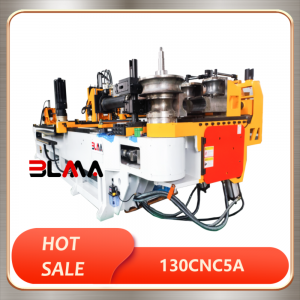
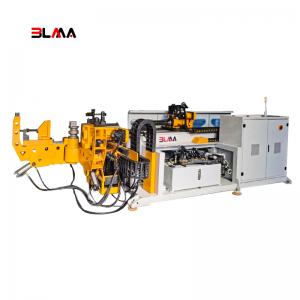
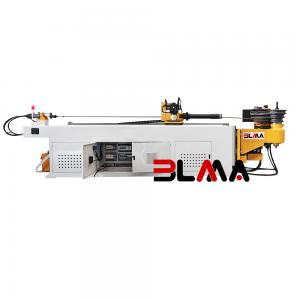
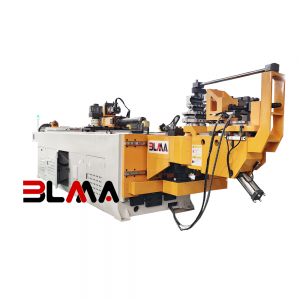
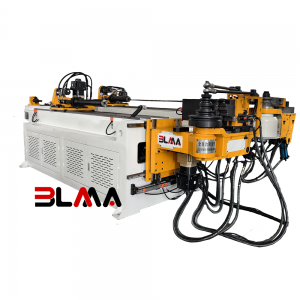
A CNC press brake is a machine used to bend sheet metal with high precision. It is widely used in industries such as automotive manufacturing, electrical cabinets, steel furniture, elevators, and construction equipment.
Compared with traditional bending machines, CNC press brakes offer better accuracy, automation, and efficiency.
Understanding how this machine works can help manufacturers choose the right equipment and improve production quality.
Key Components of a CNC Press Brake
A CNC press brake consists of several important systems working together.
Machine Frame
The frame provides structural stability.
High-quality machines use welded steel frames that are stress-relieved to maintain long-term accuracy.
CNC Controller
The CNC system is the control center of the machine.
Operators can program:
-
Bending angles
-
Backgauge positions
-
Stroke depth
-
Production sequences
Advanced systems also provide 3D simulation and automatic correction.
Hydraulic or Servo Drive System
This system moves the ram up and down.
It controls the bending force and ensures smooth and stable movement.
Tooling System
The tooling includes the punch and die.
Different tooling allows manufacturers to perform:
-
V bending
-
U bending
-
Offset bending
-
Custom forming.
Backgauge
The backgauge positions the metal sheet accurately before bending.
Multi-axis backgauges are used for complex parts.
CNC Press Brake Working Process
The operation of a CNC press brake follows several steps.
Step 1 – Programming
The operator inputs parameters such as:
-
Material thickness
-
Bending angle
-
Bend sequence
-
Tool selection
The system calculates the required bending force.
Step 2 – Material Positioning
The metal sheet is placed on the machine bed.
The backgauge moves automatically to the programmed position.
Step 3 – Bending
The ram moves downward.
The punch presses the sheet into the die, creating the desired angle.
Step 4 – Springback Compensation
Metal tends to slightly return to its original shape.
Modern CNC systems automatically adjust to ensure accurate angles.
Step 5 – Next Bend
The ram returns upward and the sheet is repositioned for the next bend.
Types of Bending Operations
CNC press brakes can perform different bending methods.
Air bending
The most commonly used technique, offering flexibility and lower force requirements.
Bottom bending
Provides higher accuracy by pressing the material into the die.
Coining
Used when extremely precise angles are required.
Advantages of CNC Press Brakes
Modern CNC press brakes provide many benefits:
-
High accuracy and repeatability
-
Reduced setup time
-
Ability to produce complex parts
-
Lower production cost
-
Improved productivity
These advantages make CNC press brakes essential equipment in modern manufacturing.
Conclusion
A CNC press brake works by combining precision tooling, CNC control systems, and controlled bending force to shape metal sheets accurately.
With the development of automation and smart manufacturing, CNC press brakes continue to evolve and play a critical role in global metal fabrication.