English
 français
 русский
 español
 português
 العربية
 Türkçe
 ไทย
ไทย Tiếng việt
 chinese
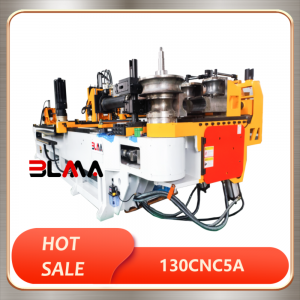
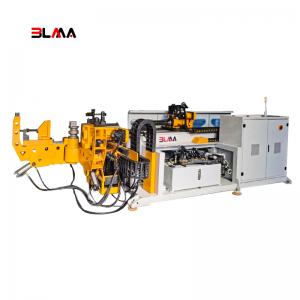
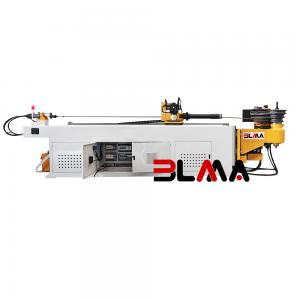
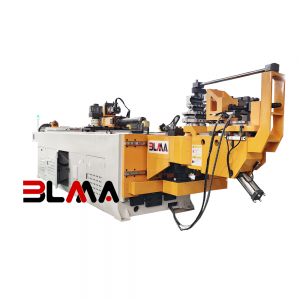
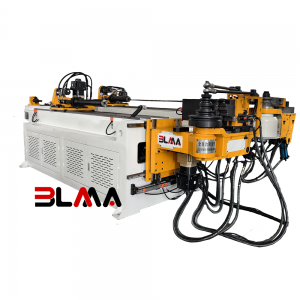
What Is a Tube Bending Machine?
A tube bending machine is designed to bend metal tubes into specific angles and shapes without damaging the material. These machines are widely used in industries such as automotive manufacturing, furniture production, construction, shipbuilding, and industrial equipment fabrication.
With the advancement of technology, tube bending machines have become more precise, efficient, and capable of producing complex parts.
Understanding how a tube bending machine works helps manufacturers improve production quality and reduce material waste.
Basic Principle of Tube Bending
The working principle of a tube bending machine is relatively simple.
The machine applies controlled force to a tube and forms it around a bending die, creating the desired angle and radius.
During the bending process, the tube is held firmly by several tools to maintain accuracy and prevent deformation.
These tools guide the tube while ensuring the surface and shape remain intact.
Main Parts of a Tube Bending Machine
A typical tube bending machine includes several key components.
Bending Die
The bending die determines the bending radius and forms the tube into the required shape.
Clamp Die
The clamp die holds the tube securely during bending.
Pressure Die
The pressure die supports the tube and ensures smooth movement during the bending process.
Mandrel
For thin-wall tubes, a mandrel is inserted inside the tube to prevent wrinkles and collapse.
Machine Structure
The machine frame provides strength and stability for high-precision bending.
Step-by-Step Tube Bending Process
The bending process usually follows these steps.
Step 1 – Tube Positioning
The tube is placed into the machine and aligned with the bending tooling.
Step 2 – Clamping the Tube
The clamp die secures the tube to prevent movement.
Step 3 – Applying Bending Force
The bending arm rotates the tube around the bending die to create the desired angle.
Step 4 – Supporting the Tube
The pressure die and mandrel support the tube during bending to prevent damage.
Step 5 – Completing the Bend
After the bend is completed, the machine releases the tube and prepares for the next operation.
Types of Tube Bending Machines
Different types of tube bending machines are used depending on production needs.
Manual Tube Benders
Suitable for simple bending tasks and small workshops.
Hydraulic Tube Benders
Provide more power and are used for thicker materials.
CNC Tube Benders
Allow automatic bending of complex shapes with high precision.
Applications of Tube Bending Machines
Tube bending machines are used in many industries, including:
-
Automotive exhaust systems
-
Metal furniture frames
-
Bicycle and motorcycle parts
-
Construction equipment
-
Aerospace components
-
Energy pipelines
Because tubes are used in many products, tube bending machines are essential equipment in modern manufacturing.
Advantages of Modern Tube Bending Machines
Modern tube bending machines provide several advantages:
• High precision
• Consistent bending quality
• Reduced production time
• Less material waste
• Ability to produce complex shapes
These benefits make tube bending machines increasingly important in modern industrial production.
Conclusion
A tube bending machine works by combining precision tooling, controlled force, and stable machine structure to shape metal tubes accurately.
With growing demand in global manufacturing, tube bending technology continues to evolve and improve production efficiency.