English
 français
 русский
 español
 português
 العربية
 Türkçe
 ไทย
ไทย Tiếng việt
 chinese
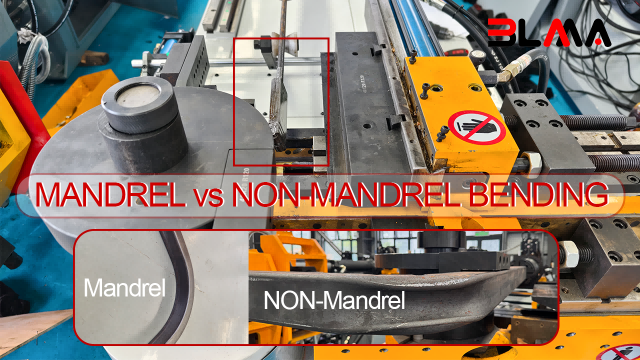
Why do rectangular tubes wrinkle, flatten, or collapse during bending?
This is a common manufacturing challenge, particularly when processing thin-walled rectangular tubes, tight bending radii, or components requiring precise dimensional tolerances.
Unlike round tubes, rectangular tubes have flat walls and corners that respond differently to the tensile and compressive forces generated during bending.
Without adequate internal support, the tube may develop wrinkles along the inner bending radius, experience cross-sectional distortion, or suffer localized wall collapse.
For manufacturers producing furniture frames, automotive components, fitness equipment, and industrial structures, these defects can affect both the appearance and dimensional accuracy of the finished product.
One of the most effective solutions is to use a properly designed internal mandrel combined with suitable bending tooling and optimized CNC bending parameters.
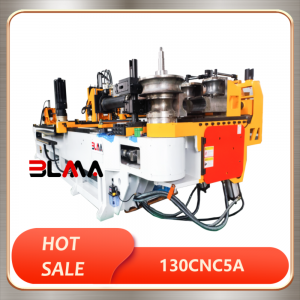
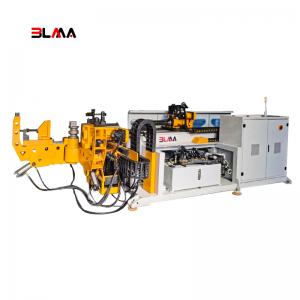
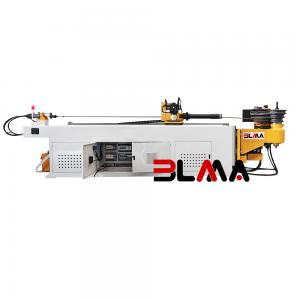
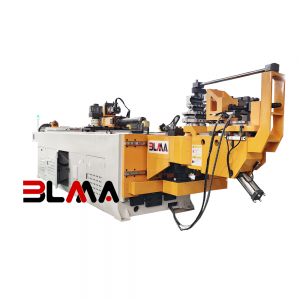
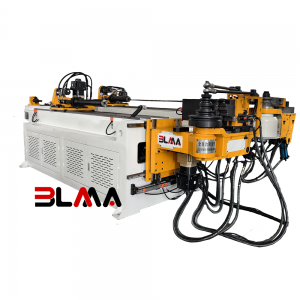
In this article, BLMA explains the causes of rectangular tube bending defects, demonstrates actual bending results, and explores how mandrel support and precision tooling help achieve smooth, consistent bends.
1. Why Do Rectangular Tubes Wrinkle During Bending?
During tube bending, the material on the outside of the bend is stretched, while the material on the inside is compressed.
If the compressive stress exceeds the stability of the inner tube wall, the material may buckle, resulting in visible wrinkles.
Rectangular tubes are particularly susceptible to this problem because their flat walls provide less resistance to certain forms of localized buckling than a continuously curved profile.
Several factors influence the severity of wrinkling.
Thin tube walls
Thin-walled rectangular tubes have lower resistance to localized buckling and may require additional internal support during bending.
Tight bending radii
Smaller centerline bending radii generally create more demanding forming conditions and increase the risk of wrinkling and cross-sectional deformation.
Insufficient internal support
Without an appropriately designed mandrel, the tube walls may deform under compressive forces during bending.
Incorrect tooling configuration
Unsuitable bending dies, pressure die settings, mandrel positioning, or inadequate lubrication can contribute to poor bending quality.
Understanding these factors is essential when selecting a rectangular tube bending machine and determining the appropriate tooling configuration.
2. What Happens When Rectangular Tubes Are Bent Without a Mandrel?
When a rectangular tube is bent without internal support, its walls must resist the forming forces without reinforcement from inside the profile.
Under demanding bending conditions, this can lead to wrinkles, flattening, and localized wall collapse.
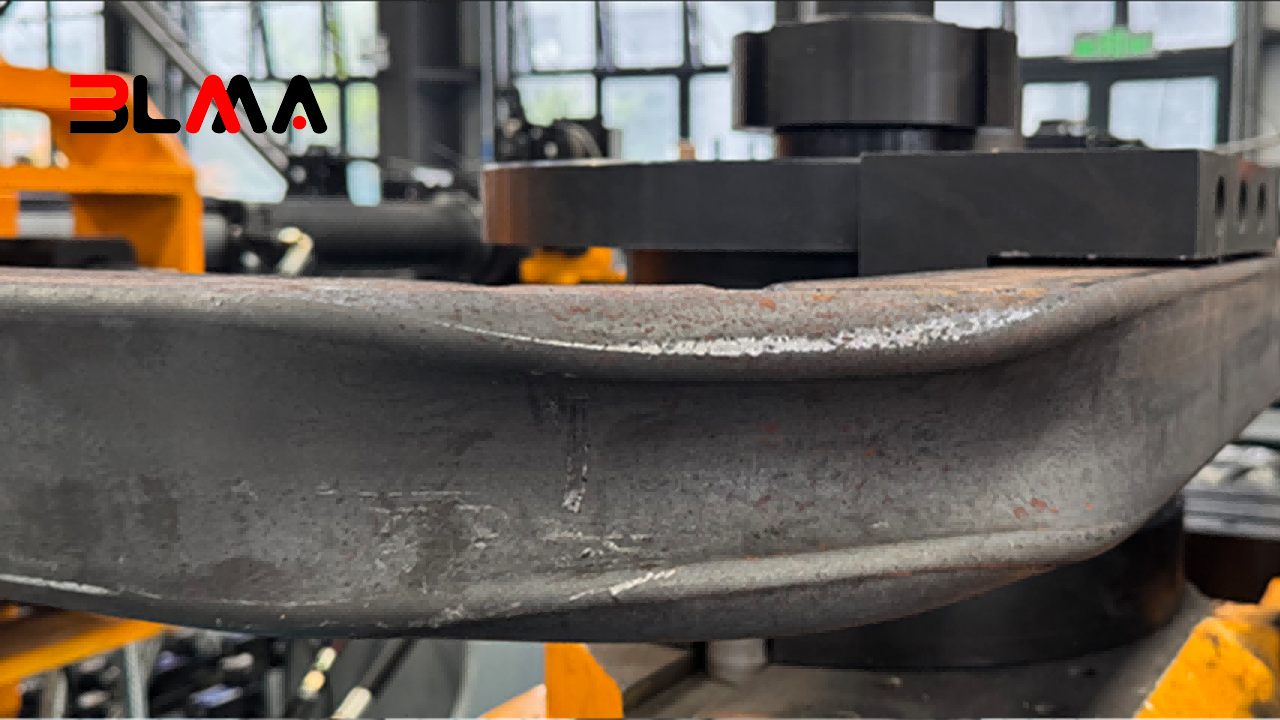
Rectangular Tube Wrinkling Without Mandrel Support
The image above illustrates the wrinkling and deformation that can occur when a rectangular tube is bent without adequate internal support.
Compressive forces along the inner bending radius may cause the tube wall to buckle, producing visible wrinkles and an uneven bending surface.
Common bending defects include:
-
Wrinkling along the inner bending radius.
-
Flattening or distortion of the rectangular cross-section.
-
Localized wall collapse.
-
Uneven deformation around the tube corners.
-
Reduced dimensional consistency between finished workpieces.
These defects can create additional manufacturing challenges, especially when bent tubes must be welded, assembled, or fitted into precision structures.
However, non-mandrel bending is not inherently unsuitable. Some thicker-walled rectangular tubes and larger-radius bends can be produced successfully without internal support.
The appropriate bending method depends on the specific tube geometry and finished product requirements.
3. How Does Mandrel Support Improve Rectangular Tube Bending Quality?
A mandrel is an internal support tool inserted into the tube to help stabilize its cross-sectional geometry during bending.
For rectangular tubes, the mandrel must be designed to match the internal profile while providing suitable clearance for the forming process.
As the tube bends, the mandrel supports the walls around the deformation zone, helping resist localized buckling and unwanted cross-sectional distortion.
With the correct mandrel design and positioning, manufacturers can achieve smoother bending surfaces, reduced wrinkling, and improved dimensional consistency.
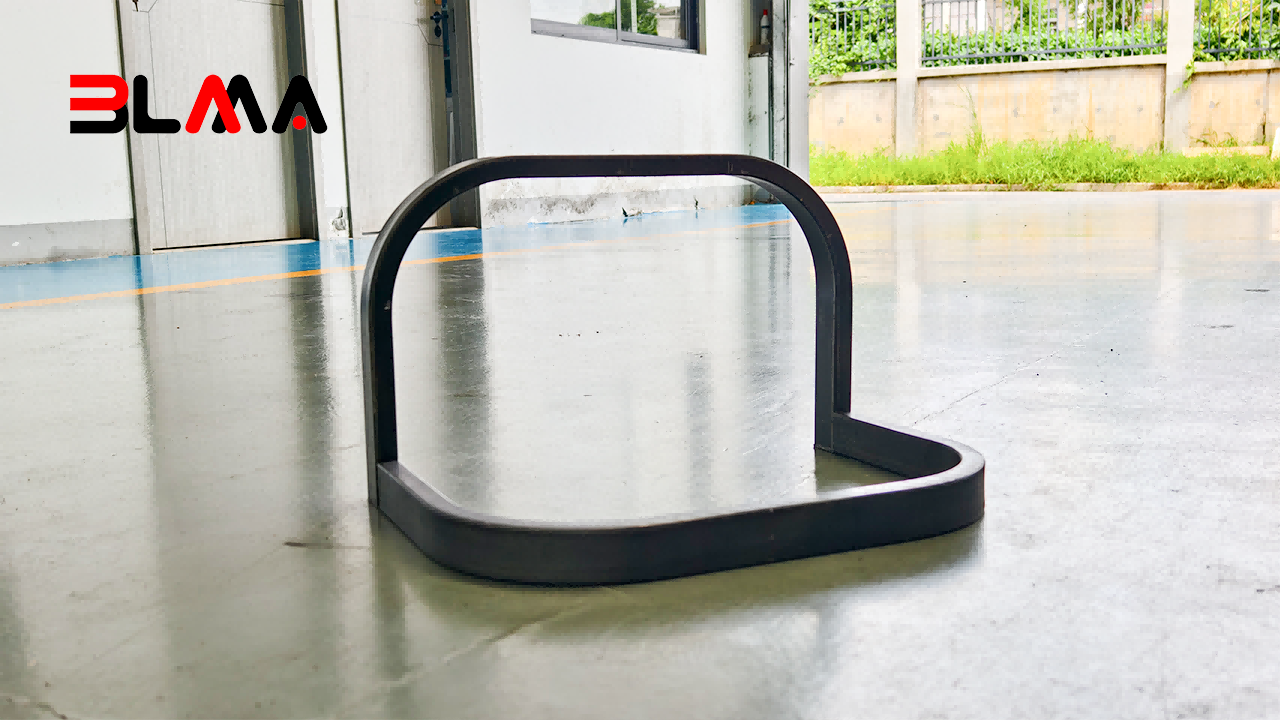
Precision Rectangular Tube Bending with Internal Mandrel Support
This rectangular tube was bent using a BLMA CNC tube bending machine equipped with internal mandrel support.
The finished workpiece demonstrates a smooth bending surface and well-maintained cross-sectional geometry, with minimal visible wrinkling or deformation.
The two examples illustrate the importance of appropriate internal support in demanding rectangular tube bending applications.
Actual bending results also depend on material properties, wall thickness, bending radius, tooling design, and machine settings.
4. Watch BLMA Rectangular Tube Bending in Action
See how BLMA CNC tube bending technology produces smooth and consistent rectangular tube bends using internal mandrel support.
The following video demonstrates the actual bending process and the finished workpiece.
https://youtu.be/ickZZOtptJ4
What Does This Bending Video Demonstrate?
The video highlights how suitable internal support and precision CNC bending control help maintain the rectangular tube's cross-sectional geometry during forming.
By selecting the appropriate mandrel and tooling configuration, manufacturers can reduce unwanted deformation and achieve consistent bending results.
For furniture frames, automotive components, fitness equipment, and other precision-fabricated structures, maintaining the required tube geometry is essential for reliable assembly and product quality.
5. Why Do Square and Oval Tubes Also Need Mandrel Support?
Rectangular tubes are not the only profiles susceptible to deformation during bending.
Square and oval tubes also have non-circular cross-sections that require careful control of material movement and wall stability.
For square tubes, the flat walls and corners may experience localized buckling or distortion during bending.
For oval tubes, the curved and flattened sections may deform differently under bending forces, making suitable tooling geometry and internal support particularly important.
For most precision bending applications involving these profiles, mandrel support plays an important role in maintaining the required cross-sectional shape.
The appropriate mandrel design depends on the tube dimensions, wall thickness, material, bending radius, and acceptable deformation tolerances.
6. How to Select the Right Mandrel and Tooling for Rectangular Tube Bending
Achieving high-quality rectangular tube bending requires more than simply inserting a mandrel into the tube.
The mandrel, bending die, clamp die, pressure die, and other tooling components must work together to control material deformation.
Mandrel design and fit
The mandrel should match the internal geometry of the rectangular tube while providing appropriate clearance for the bending operation.
An unsuitable mandrel shape or incorrect clearance can contribute to excessive friction, surface damage, or insufficient wall support.
Mandrel positioning
The position of the mandrel relative to the bending tangent influences how effectively it supports the tube during forming.
Incorrect positioning may reduce its effectiveness or create additional bending problems.
Bending die and pressure die
The bending die determines the bending geometry, while the pressure die provides external support and helps control material movement.
Both components must be selected and adjusted according to the tube profile and bending requirements.
Wiper die
For demanding bending applications, a properly designed wiper die may provide additional support near the inner bending radius and help reduce wrinkling.
Sample bending and parameter optimization
Before mass production, sample bending tests should be performed when processing new materials, complex profiles, or demanding bending radii.
Machine parameters and tooling positions can then be adjusted according to the actual bending results.
7. BLMA Precision Tooling and CNC Tube Bending Solutions
BLMA manufactures CNC tube bending machines and application-specific tooling for round, square, rectangular, and oval tube bending.
Our tooling is manufactured using CNC machining centers and high-quality 42CrMo steel to support dimensional accuracy, durability, and consistent bending performance.
BLMA also uses a gantry machining center valued at approximately USD 500,000 for precision machining of machine frames and structural components.
These manufacturing capabilities help support machine accuracy and long-term mechanical stability.
For rectangular tube bending applications, our engineering team evaluates the tube geometry, material, wall thickness, bending radius, and finished product requirements to determine the appropriate machine and tooling configuration.
By combining precision tooling, suitable mandrel support, and CNC bending control, BLMA provides tube bending solutions for automotive manufacturing, furniture production, fitness equipment, and general metal fabrication.
8. Frequently Asked Questions About Rectangular Tube Bending
Q1. Why does a rectangular tube wrinkle during bending?
Wrinkling occurs when compressive stresses cause the inner tube wall to buckle. Thin walls, tight bending radii, insufficient internal support, and unsuitable tooling settings can increase the risk.
Q2. Can a mandrel prevent rectangular tube wrinkling?
A properly designed and positioned mandrel can significantly reduce wrinkling by supporting the tube walls during bending. Other tooling and process parameters must also be correctly configured.
Q3. Is a mandrel necessary for every rectangular tube?
Not necessarily. Most precision rectangular tube bending applications benefit from mandrel support, but the actual requirement depends on wall thickness, tube dimensions, material, bending radius, and acceptable deformation.
Q4. What is the difference between a mandrel and a wiper die?
A mandrel supports the tube internally, while a wiper die provides external support near the inner bending radius to help control wrinkling. They perform different functions and may be used together.
Q5. Can the same mandrel be used for different rectangular tube sizes?
Mandrels are generally designed for specific internal tube dimensions and profiles. Different tube sizes or wall thicknesses may require different mandrels to provide appropriate support and clearance.
Q6. Can rectangular tubes be bent without a mandrel?
Yes. Some thicker-walled rectangular tubes and larger-radius bends can be produced without internal mandrel support. However, demanding precision applications often require a mandrel to control deformation.
Q7. What information is required to select the correct rectangular tube bending machine?
The tube's outside dimensions, wall thickness, material, centerline bending radius, bending angle, and finished product requirements are important. Technical drawings and sample tubes can also help determine the appropriate machine and tooling configuration.
Q8. Which industries commonly use rectangular tube bending machines?
Rectangular tube bending machines are used in automotive manufacturing, furniture production, fitness equipment, structural fabrication, and other industrial metalworking applications.
Conclusion
Rectangular tube wrinkling is a common manufacturing challenge, particularly when processing thin-walled profiles or demanding bending radii.
Proper internal mandrel support, combined with suitable tooling design and optimized CNC bending parameters, can significantly improve bending quality and reduce unwanted deformation.
For manufacturers working with square, rectangular, and oval tubes, selecting the appropriate CNC tube bending machine and tooling configuration is essential to achieving consistent, high-quality results.
As demonstrated by the actual bending examples and video, BLMA provides precision tube bending solutions designed to meet different industrial manufacturing requirements.
Need a solution for rectangular tube bending?
Send BLMA your tube dimensions, material, wall thickness, bending radius, and technical drawings. Our engineering team can help evaluate the appropriate bending process, mandrel design, and tooling configuration for your application.
Read more:
https://www.blmamachinery.com/Mandrel-vs-Non-Mandrel-Tube-Bending-Differences-Applications-Bending-Quality-id06883725.html