English
 français
 русский
 español
 português
 العربية
 Türkçe
 ไทย
ไทย Tiếng việt
 chinese
How to Choose a Pipe Bending Machine That Prevents Square Tube Wrinkling
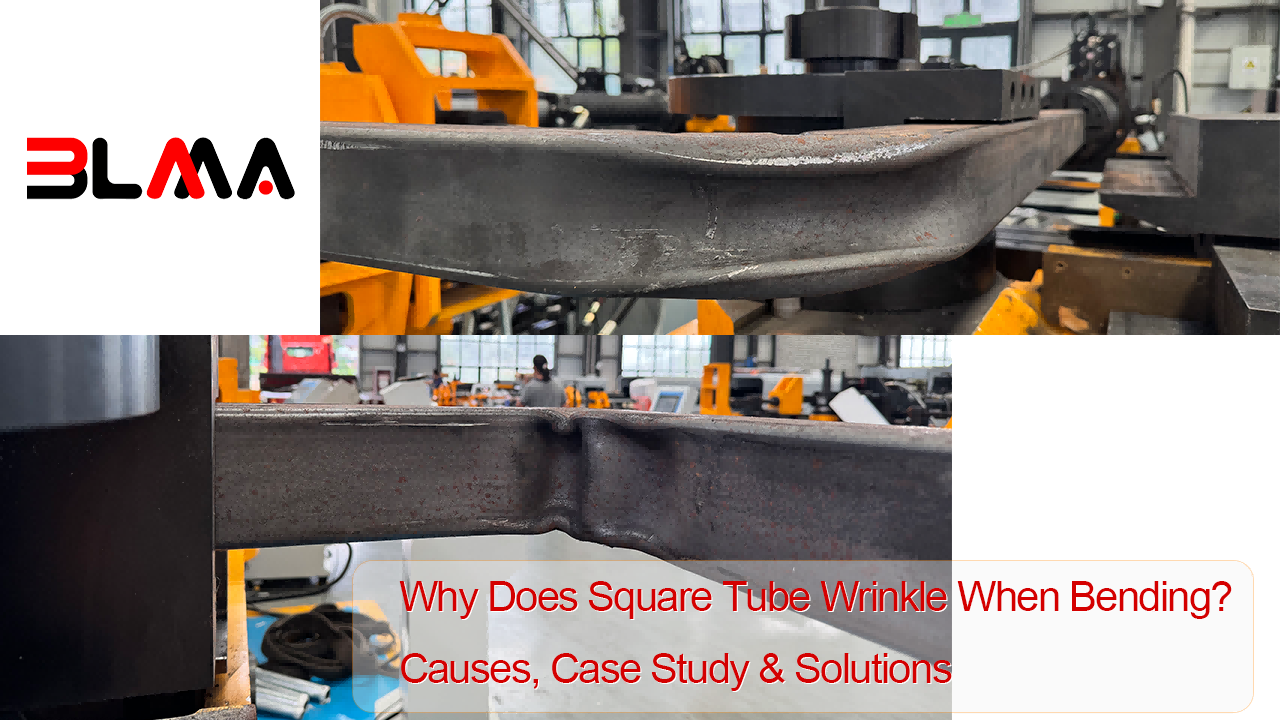
If you've ever dealt with wrinkled square tube coming off a bending machine, you already know the cost — scrapped material, rework, and production delays. What many buyers don't realize is that the machine itself is often the biggest variable in whether a bend comes out clean or wrinkled.
This guide walks through what to actually look for when selecting a pipe bending machine for square or rectangular tube — before wrinkling becomes a recurring problem on your production line.
(For a deep-dive into the root causes of wrinkling and a real case study, see our technical article: Why Does Square Tube Wrinkle When Bending?)
Why the Machine Matters More Than You'd Think
It's tempting to treat wrinkling as purely a tooling or operator issue. In reality, the machine's control precision sets the ceiling for how consistent your results can ever be — even with perfect tooling and a skilled operator.
Three machine-level factors determine that ceiling:
- How precisely the mandrel position is controlled through the bend cycle
- How repeatable the clamping pressure is from part to part
- How consistent the bend speed stays across a full production run
A machine that can't hold tight tolerances on these three variables will produce inconsistent results no matter how well the process is dialed in on any given day.
Key Specifications to Check Before You Buy
1. Mandrel Control Type
Look specifically at how the mandrel is positioned and extracted. Servo-controlled mandrel systems — synchronized electronically with the bend cycle — maintain far more consistent internal wall support than mechanically-timed or manually-adjusted systems. For square and rectangular tube, this consistency is what prevents the wall from collapsing inward during the bend.
2. Tube Capacity Range (OD, Wall Thickness, Bend Radius)
Machines are typically rated by round tube capacity (OD and wall thickness), with square/rectangular capacity calculated from an equivalent profile size. Don't just check whether a machine "can" bend your tube size — check whether it sits comfortably within the machine's rated capacity, rather than at the upper limit. Bending near a machine's maximum capacity leaves little margin for error and increases wrinkling risk.
3. Clamping System Repeatability
Ask whether clamping pressure is manually set (and therefore operator-dependent) or programmable and repeated automatically for every cycle. Programmable clamping removes a major source of part-to-part variation — and variation is where wrinkling tends to creep in.
4. Tooling Compatibility for Non-Round Profiles
Not every bending machine tooling system is built to properly support square or rectangular tube. Confirm that form-fitted mandrels and dies are available (or can be custom-made) for your specific tube profile — a generic round mandrel will not adequately support a square tube wall.
5. Feeding Length and Structural Rigidity
For longer parts or heavier wall tube, machine bed rigidity matters. Look for beds built from welded, stress-relieved steel plate designed to resist deformation under repeated heavy loads — a flexing bed frame translates directly into inconsistent bend quality over time.
6. Servo Motor and Drive Quality
The precision of bend speed and positioning ultimately comes down to motor and drive quality. Industrial-grade servo motors and drives (from established brands) provide tighter, more repeatable control than lower-cost alternatives — a difference that shows up most on tight-radius or thin-to-medium wall tube.
A Practical Example: Matching a Machine to a 90x90x3mm Square Tube Application
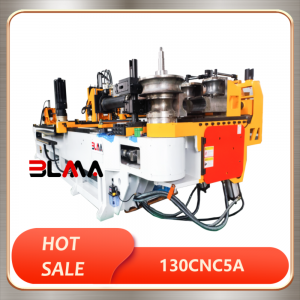
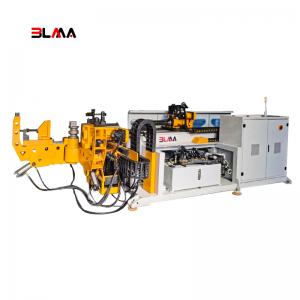
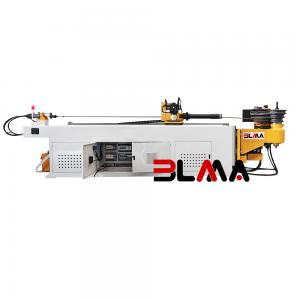
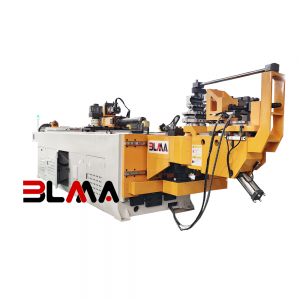
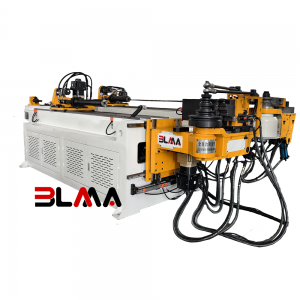
As a reference point, a heavy-duty CNC mandrel bending machine like the BLMA DW130CNC-2A1S — rated for round tube up to 130mm OD / 8mm wall thickness, with servo-controlled single-layer tooling and a 4500mm feeding length — comfortably covers medium-profile square tube applications such as 90x90x3mm, when paired with a form-fitted mandrel and dies matched to that profile.
The takeaway isn't "buy this specific model" — it's the selection logic: match the machine's rated capacity, mandrel control system, and tooling compatibility to your actual tube profile, rather than choosing based on price or general-purpose capacity claims alone.
Questions to Ask a Bending Machine Supplier Before You Buy
- Is the mandrel position servo-controlled, or mechanically timed?
- Is clamping pressure programmable and repeatable, or manually adjusted each time?
- Can you supply form-fitted tooling for square/rectangular profiles, or only round?
- What is the machine's rated capacity for my specific tube size and wall thickness — and how close to the limit does my application sit?
- What brand of servo motors, drives, and PLC does the machine use?
A supplier who can answer these clearly — with specific tooling and capacity data for your tube profile — is a strong signal they understand square tube bending, not just round tube.
Frequently Asked Questions
Q: Is a more expensive bending machine always better for preventing wrinkling?
A: Not necessarily — but price differences often reflect real differences in mandrel control precision, clamping repeatability, and build quality. The right question isn't "cheapest vs. most expensive," but whether a machine's control specifications match the tolerance your application requires.
Q: Can I use the same tooling for round and square tube on one machine?
A: No. Square and rectangular tube require form-fitted mandrels and dies matched to that specific profile. Round tube tooling will not properly support a square tube wall during bending.
Q: What's more important for preventing wrinkling — the machine or the operator?
A: Both matter, but the machine sets the ceiling. A skilled operator can get good results from a well-specified machine; even the best operator can't fully compensate for inconsistent mandrel or clamping control on an undersized or poorly matched machine.
Q: How do I know if a machine's capacity is a good match for my square tube size?
A: Compare your tube's profile against the machine's rated round-tube OD and wall thickness capacity, and confirm with the supplier that dedicated tooling exists for your exact square/rectangular dimensions — don't rely on general capacity claims alone.
Final Thoughts
Preventing square tube wrinkling starts before the first part is ever bent — at the machine selection stage. Mandrel control precision, clamping repeatability, and proper tooling compatibility matter more than most buyers realize until they're already dealing with a wrinkling problem on the shop floor.
Nanjing BLMA Machinery has manufactured CNC pipe and tube bending machines since 1987, with tooling and machine configurations for round, square, and rectangular tube across automotive, furniture, HVAC, and structural steel applications. If you're evaluating equipment for a specific tube profile, our technical team can help match the right machine and tooling to your application — explore our CNC tube bending machine range or contact us directly.