English
 français
 русский
 español
 português
 العربية
 Türkçe
 ไทย
ไทย Tiếng việt
 chinese
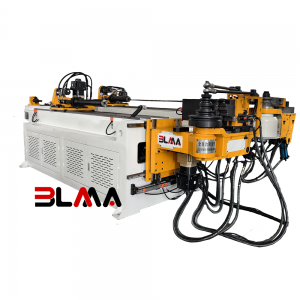
Tube Bending Machine Types Explained
Tube bending is a critical manufacturing process used to create curved metal tubes for a wide range of industrial applications. From automotive exhaust systems to furniture frames and aerospace components, tube bending machines allow manufacturers to produce complex tube shapes with high precision and consistency.
As manufacturing technology has advanced, tube bending machines have evolved significantly. Modern factories now use a variety of bending technologies depending on production requirements, automation level, and precision demands.
In general, tube bending machines can be divided into three major categories:
-
Manual tube bending machines
-
Hybrid hydraulic tube bending machines
-
Full electric tube bending machines
Each type represents a different stage in the evolution of tube bending technology.
Manual Tube Bending Machines – Traditional and Simple
Manual tube bending machines are the most traditional form of tube bending equipment. These machines rely entirely on manual operation to apply bending force to metal tubes.
Because of their simplicity and affordability, manual tube benders remain widely used in small workshops and maintenance environments.
Key Characteristics
Manual tube bending machines typically feature a simple structure consisting of a bending die, clamping mechanism, and manual lever system.
They are suitable for:
-
small production volumes
-
simple bending requirements
-
maintenance and repair work
-
small furniture or railing fabrication
However, manual tube bending machines cannot deliver the level of precision and productivity required by modern industrial manufacturing.
Hybrid Hydraulic Tube Bending Machines – Industrial Workhorses
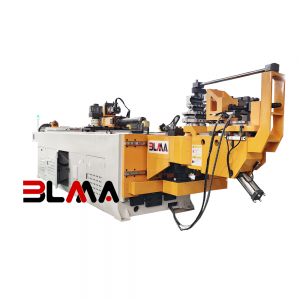
Hybrid hydraulic tube bending machines represent the next stage in the development of tube bending technology. These machines combine hydraulic power systems with CNC control technology.
Hydraulic systems generate powerful bending forces, making them suitable for processing large-diameter tubes and thick-wall materials.
Advantages of Hydraulic Tube Bending Machines
Hydraulic machines provide several important benefits:
-
strong bending capacity
-
stable operation under heavy loads
-
suitable for medium and large tube sizes
-
reliable performance in industrial environments
Because of these characteristics, hydraulic tube bending machines have long been the standard equipment used in industries such as construction machinery, shipbuilding, and structural steel fabrication.
Full Electric Tube Bending Machines – The Next Generation Technology
In recent years, full electric tube bending machines have emerged as the most advanced solution in the tube bending industry.
Unlike hydraulic machines, full electric tube bending machines are powered entirely by servo motors. This allows extremely precise control over every movement in the bending process, including tube feeding, rotation, and bending angles.
Advantages of Electric Tube Bending Technology
Full electric tube bending machines offer significant improvements over traditional technologies.
Higher Precision
Servo motor control enables extremely accurate bending angles and positioning.
Higher Production Speed
Electric drive systems respond faster than hydraulic systems, improving cycle times.
Energy Efficiency
Electric machines consume less energy and operate more efficiently.
Reduced Maintenance
Without hydraulic oil systems, maintenance requirements are significantly reduced.
Cleaner Production Environment
Electric machines eliminate oil leakage risks, which is important for modern factories.
Because of these advantages, full electric tube bending machines are becoming the preferred solution for precision manufacturing industries.
Application of Full Electric Tube Bending Machines in Automotive Manufacturing
One of the industries that benefits the most from electric tube bending technology is the automotive industry.
Automotive components require extremely consistent bending accuracy, especially for structural tubes, exhaust systems, and safety components.
Full electric tube bending machines provide the precision and stability required for automotive production lines.
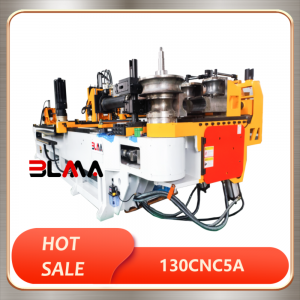
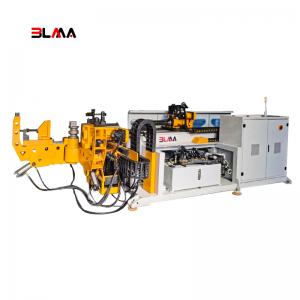
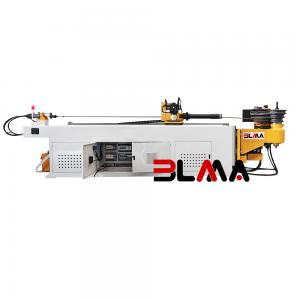
BLMA DW130CNC-12AMSV Full Electric Tube Bending Machine
To support modern automotive manufacturing, BLMA has developed advanced full electric tube bending technology.
The BLMA DW130CNC-12AMSV Full Electric Tube Bending Machine represents one of the most advanced solutions available today.
This machine offers:
-
fully electric servo drive system
-
multi-axis CNC control
-
high precision bending performance
-
excellent long-term stability
-
ideal solution for automotive tube processing
With its advanced control system and robust design, the DW130CNC-12AMSV helps manufacturers achieve efficient and stable production.
Why Electric Tube Bending Machines Are the Future
Manufacturing industries are increasingly focused on automation, energy efficiency, and precision production.
Full electric tube bending machines align perfectly with these goals. Compared with traditional hydraulic systems, electric machines provide higher efficiency, cleaner operation, and superior bending accuracy.
As a result, electric tube bending technology is expected to become the dominant solution in the future of tube processing.
Conclusion
Tube bending machines have evolved from simple manual equipment to advanced CNC-controlled systems capable of producing highly complex shapes.
Today, the three main types of tube bending machines include:
-
Manual tube bending machines
-
Hybrid hydraulic tube bending machines
-
Full electric tube bending machines
Among these technologies, full electric tube bending machines represent the future of high-precision tube processing, especially for industries such as automotive manufacturing.
Innovative machines like the BLMA DW130CNC-12AMSV demonstrate how electric tube bending technology can deliver superior performance, stability, and efficiency for modern production environments.